Stopping the use of a dummy is an important step in a child's development. For many parents, it can feel like a challenge, especially if the dummy has been a faithful companion at bedtime and in moments of comfort. In this guide, we look at when it's time to take the plunge, how to stop using a dummy and what happens afterwards.
When should you stop using a dummy?
Babies are born with a natural need for sucking that fulfils several functions - it soothes, comforts and helps the baby relax. But over time, this need diminishes, and using a dummy for too long can affect both dental development and speech.
According to recommendations from 1177 and Public dental services the child should stop using a dummy at 3-4 years of age. After the age of three, excessive nap use (more than 6 hours per day) can lead to problems such as overbite or open bite, and influence the development of speech.
How to stop using a pacifier?
Stopping the use of a dummy requires patience, planning and understanding your child's feelings. Here are some concrete tips for a smooth transition.
1. prepare the child well in advance
Start talking about the fact that it will soon be time to stop using a dummy - preferably several weeks or months in advance. Involving the child creates security.
2. Step down gradually
Start by limiting use to bedtime. For many children, it is enough that the dummy “lives in the bed” and does not follow them during the day.
3. hide the pacifier
When the dummy is out of sight, the child is less likely to think of using it. Keep it out of sight and only take it out when necessary.
4. replace the pacifier function
Comfort can also come from a story, a cuddly toy or a new bedtime routine. Closeness, cuddles and attention often work equally well.
5. Decide on a closing date
Let the child choose a day when it is time to say goodbye to the dummy. Make it a solemn event.
Playful ways to stop using a dummy
Children's imagination can be a great help in the process. Here are some tried and tested creative methods:
Reward the child
Offer a toy or experience as a reward for sleeping without a dummy for one or more nights.
Send the pacifier to Santa (or Spiderman)
Write a letter and post the dummies to a beloved fairytale character. Many children feel great and proud to be able to help others.
Hang the dummy in a dummy tree
In several towns, there are dummy trees where children can leave their dummies as a symbolic farewell.
Give the pacifier to baby animals
Tell them that kittens or baby rabbits need pacifiers more than big kids - a method that many parents have had unexpected success with.
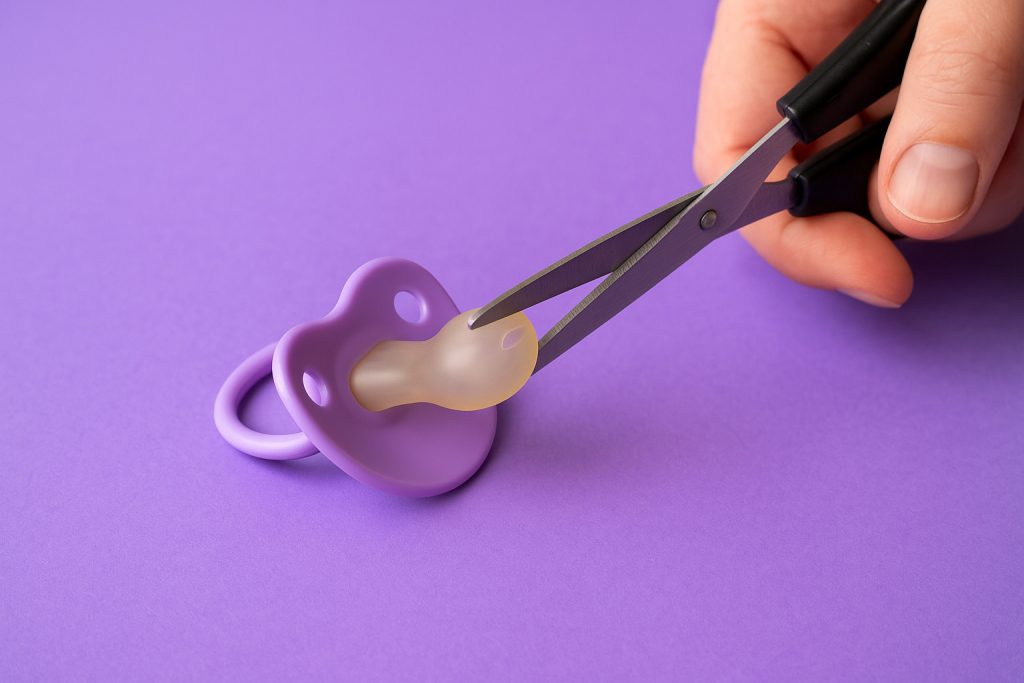
Trick: Cut holes in the pacifier to reduce suction
A tried and tested trick that many parents have found successful is to cut a small hole in the dummy. When the sucking part no longer works as usual, the comforting effect is reduced and the child often loses interest in the dummy on its own.
This is how you do it:
- Cut a small hole in the suction part of the dummy.
- If the child is still using it, cut a slightly larger hole a few days later.
- Explain that the dummy is old or broken - and that this is sometimes the case with dummies.
This method gives the child a chance to discover the change for themselves, which often leads to less protests compared to removing the dummy completely from one day to the next.
What happens after the baby stops using a dummy?
Stopping a dummy is a developmental step - and reactions vary between children. Some children stop without protest, others may show sadness or frustration. This is perfectly normal.
Common reactions:
- Temporary difficulty falling asleep
- Increased need for proximity
- Questions about when the dummy comes back
For most children, the transition is surprisingly quick. Many get used to it completely within 3 to 7 days. Be patient, encourage the child and confirm that you understand that it can be difficult.
Tip: Reinforce routines afterwards
Replace the dummy with new safety signals such as a story, night light, cuddly toy or soft music. A clear ending ritual can make the transition safer.
The child's perspective - why is the dummy so important?
For young children, the dummy is more than just plastic and silicone. It represents security, predictability and self-regulation. Many children use the pacifier to cope with tiredness, frustration or anxiety. That's why it's understandable that a change can provoke strong reactions - and also why it's so important to involve the child in the process.
Summary - quitting the pacifier in 5 steps
- Mentally prepare the child well in advance
- Gradually reduce the use of naps
- Choose a time when the child is well and everyday life is calm
- Replace the dummy with new routines and comfort
- Be consistent, but be patient if the child needs more time
Frequently asked questions - FAQ
What should I do if my baby refuses to stop using a dummy?
Take a step back and try again in a few weeks. Try tapering down rather than removing the dummy outright. Using imagination and playful methods can make a big difference.
Is it dangerous to let your baby have a dummy after the age of 3?
Not directly dangerous, but according to the Public Dental Service, it increases the risk of dental damage and speech impairment. It is therefore wise to aim to stop before the age of 4.
Can you stop using a dummy while potty training?
Both changes require energy and adaptation. If possible, take one thing at a time so as not to stress the child.
Is it OK to ”start over” if things get too hard?
Yes, that's fine. But try to avoid starting over too many times, as this can make the child unsure if you are serious. Find a balance between flexibility and consistency.
Concluding words
Stopping a dummy is a milestone - both for the child and for you as a parent. The most important thing is to meet your child with empathy, clarity and reassurance. Every child is different, but with the right preparation and tools, the transition is both possible and manageable - often easier than you think.